WordPress vs Custom Website: What Small Businesses Actually Need
A client in Mirpur called me last March, furious. He had paid a developer 85,000 BDT for a “custom” website to sell prayer mats and home textiles. Six months later he wanted to add a blog and change his homepage banner. The developer had moved abroad. Nobody else could touch the code. He was stuck paying for edits he could have done himself in ten minutes on WordPress.
That phone call sums up the WordPress vs custom website question better than any feature chart. The platform you pick decides who controls your site, how fast you can change it, and what you pay every year after launch.
What WordPress actually gives a small business
WordPress runs roughly 43% of all websites on the internet. That number matters to you for one reason: it means a huge pool of Dhaka developers, plugins, and tutorials already exists. When your developer disappears, the next person can read the same dashboard without reverse-engineering anybody’s private code.
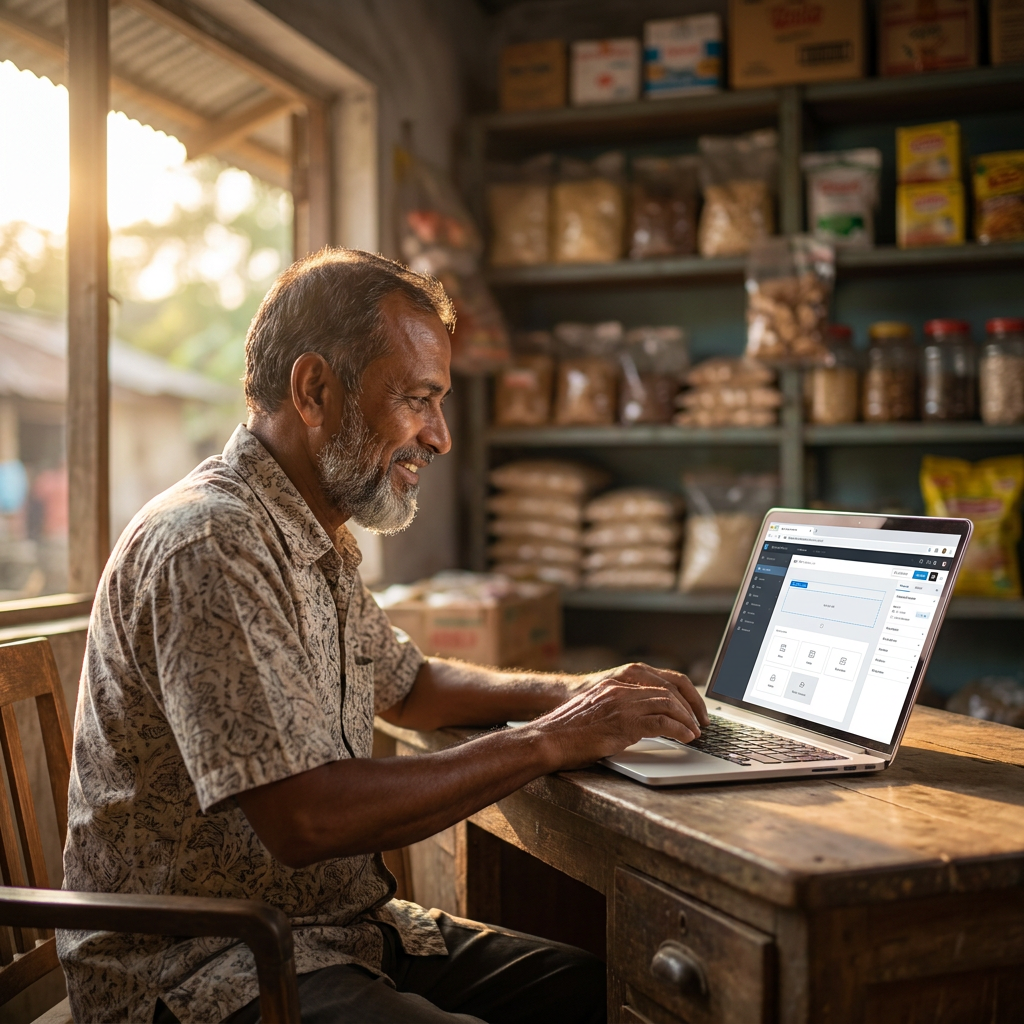
For a typical BD small business (a restaurant, a boutique, a coaching center, a parlor) WordPress covers almost everything you need. You get a content management system, a contact form, a blog, and a place to post your menu or price list. You log in, change your phone number, swap a photo, and publish. No invoice required.
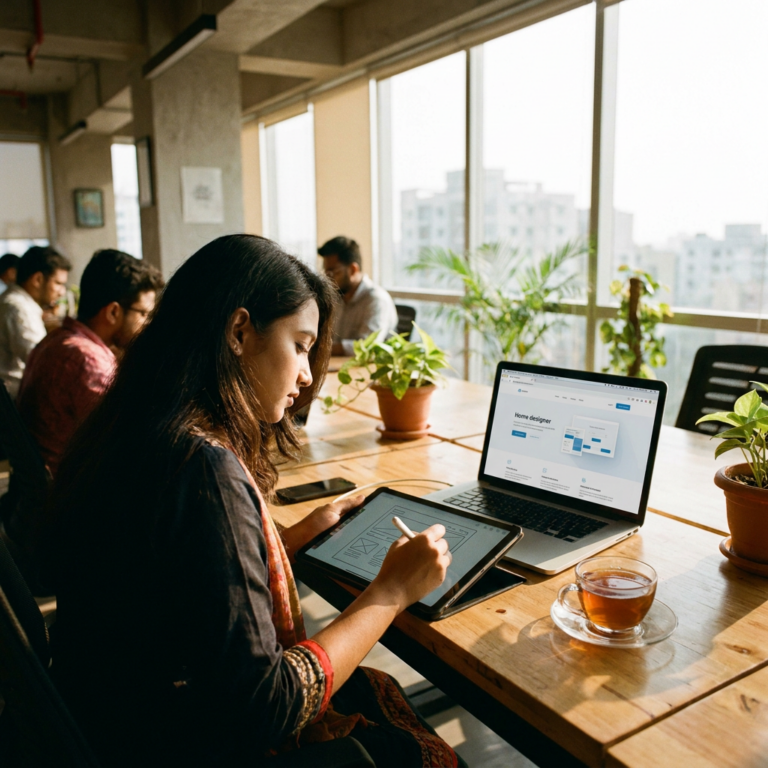
Cost is where the gap shows hardest. A clean WordPress site with a premium theme, hosting, and a domain runs you between 15,000 and 40,000 BDT for the build. A page builder like Elementor lets a designer assemble your pages without writing code, which keeps the labor hours down. Need to sell online? WooCommerce turns the same site into a store with bKash and SSLCommerz payment plugins that BD merchants already use daily.
The honest gripe nobody mentions in the sales call
Plugins are also the trap. Every plugin you install is code written by a stranger, and they fight each other. I have watched a single WooCommerce update break the checkout on three client sites in one night because a payment plugin had not been updated to match. The store owner woke up to zero orders and no idea why.
A site loaded with twenty plugins also gets slow and heavy. Each one adds scripts that the browser has to load before your homepage appears. Keep the count low, update on a schedule, and run backups, and most of this pain goes away. Ignore it, and you will pay someone like me to clean up the mess at 2,000 BDT an hour.
When a custom website is the right call
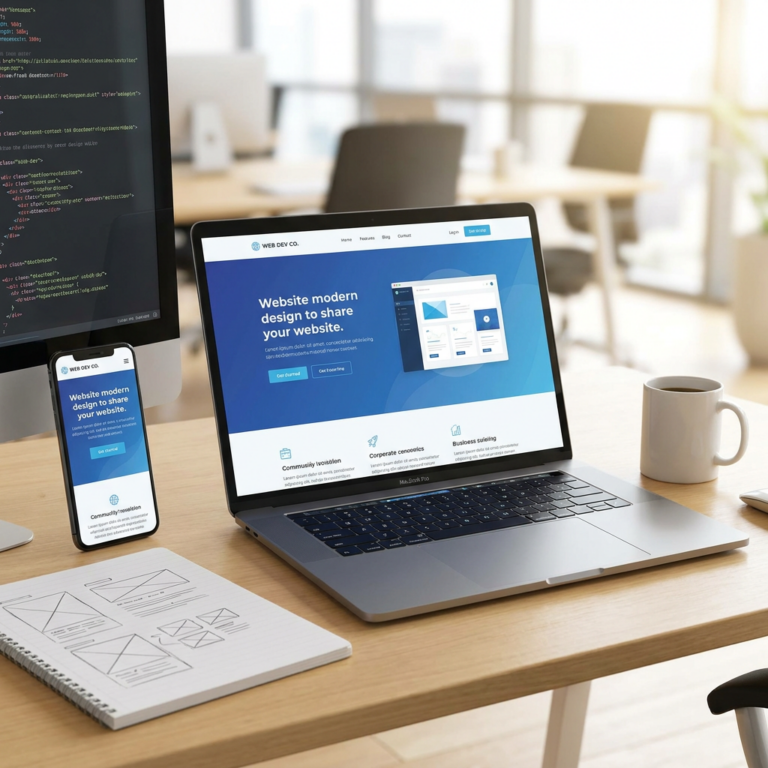
Custom website development means a developer builds your site from scratch in code (often React, Laravel, or Node) with no theme and no plugin marketplace. You own every line. Nobody else’s update can break you. For the right business, that control is worth the higher price.
I assumed custom was always overkill for small shops. A logistics startup in Banani proved me wrong. They needed live courier tracking, a driver app, and a dashboard that talked to their warehouse software. No plugin does that cleanly. WordPress would have been a pile of duct tape. The custom build cost them around 4 lakh BDT and paid for itself because the alternative was hiring two extra staff to track parcels by hand.
Pick custom when your business logic is the product. Here are the cases where I tell clients to spend the money:
- You handle thousands of transactions a day and need the site to talk to your inventory or accounting system in real time.
- You are building something users log into daily, like a booking platform, a learning portal, or a SaaS tool.
- You have strict data rules (a clinic, a fintech) where a third-party plugin is a security risk you cannot accept.
- Your traffic is large enough that plugin bloat would cost you customers at checkout.
None of those describe a sweet shop or a wedding photographer. If yours is a service or retail business that needs to look professional and rank on Google, custom is money you do not need to spend yet.
A quick CMS comparison for the platform choice
People ask me about Wix and Shopify too, so here is the short version of the CMS comparison. Wix is easy but locks you in: you cannot move your site off it, and the monthly fee runs forever. Shopify is excellent for a pure online store with hundreds of products, though its BD payment support is thinner than WooCommerce with local gateways. WordPress sits in the middle, cheap to start and yours to move whenever you want.
My rule for a website platform choice is simple. Start with WordPress unless a specific feature forces your hand. You can always rebuild custom later once your revenue justifies it. Going the other way, ripping out a 4 lakh custom site to move back to WordPress, wastes the money you already spent.
Frequently asked questions
Is WordPress good enough for SEO in Bangladesh?
Yes. WordPress with a plugin like Rank Math gives you full control over titles, meta descriptions, and sitemaps. Most top-ranking BD business blogs run on it. SEO comes from your content and site speed, not from whether the code is custom.
How much should a small business website cost in BD?
Budget 15,000 to 40,000 BDT for a solid WordPress business site, plus 3,000 to 8,000 BDT a year for hosting and domain renewal. Custom development starts near 1.5 lakh BDT and climbs fast based on features.
Can I update a WordPress site myself without a developer?
For text, photos, prices, and blog posts, yes. Anyone who can use Facebook can learn the WordPress dashboard in an afternoon. You call a developer only for design changes, new features, or when an update breaks something.
Will I ever need to switch from WordPress to custom?
Only if you outgrow it. When your daily orders, logins, or integrations push past what plugins handle cleanly, that is the signal to invest in custom. Until then, the switch costs you money for no gain.